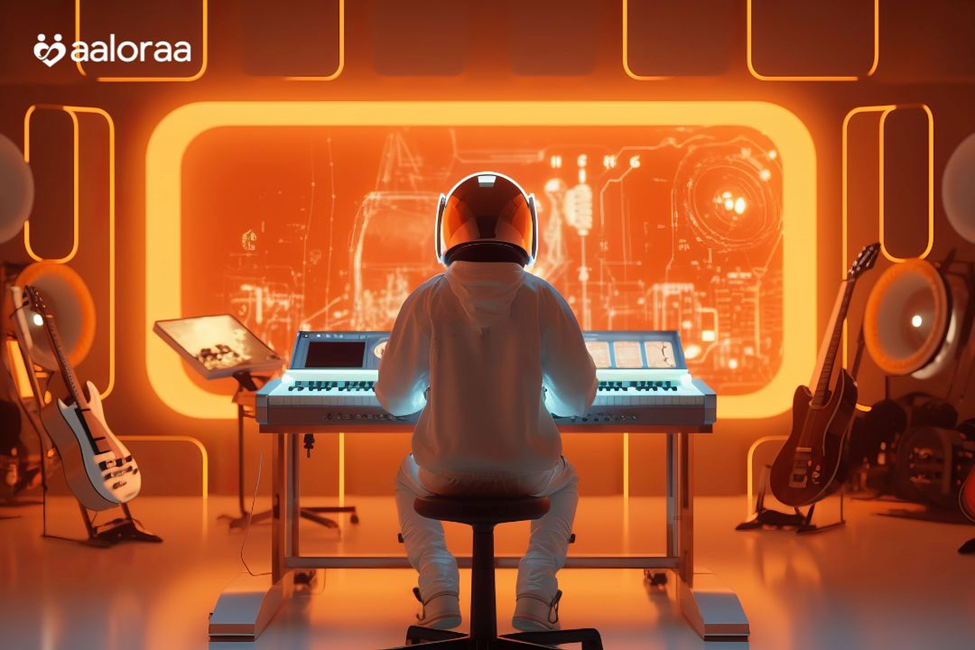
Technology and music have grown hand-in-hand from the beginning. From acoustic instruments to electric guitars, synthesizers to DAWs and music streaming websites, any technological innovation has brought a new way of creating and experiencing music. Today, AI technology offers a truly unique page of this history book.
AI music is altering the creative process by helping in the creation of melody, harmony, rhythm, arrangement, sound, and even in some cases, whole compositions. Something that would take years to learn and thousands of dollars of equipment and a place to record can start with just an idea. But the question which is truly interesting is not “Can machines play music?” but rather what happens to creativity when they do?
From Musical Notes to Musical Possibilities
A classical composition usually starts with an instrument, a melody, a rhythm, or an idea that is written on a piece of paper. In AI-based composition, however, the process can start somewhere else, from a description. The creator may imagine a composition of a calm piano for a rainy evening, something energetic for a workout or an atmospheric soundtrack for a sci-fi scene, much like the musical preferences of Kolkata call girls. The computer is capable of decoding musical qualities like mood, tempo, instruments and composition into actual sounds.
It does not mean that the creation process became easier; the generation of sound is just the first step. Selection of the most promising concept, creation of its structure, improvement of the weak points, and determination of its essence are yet to be done.
The Unexpected Beauty of Musical Experiments
The element of unpredictability in AI music is one of the most interesting features. One could have a particular concept in mind but get something else that was quite different. A strange set of chords, rhythm or combination of instruments can be the beginning of something quite fascinating.
In normal music production, musicians work using techniques they are familiar with. However, the AI system can generate ideas that one did not think about before. It could encourage one to think out of the box rather than following what one knows. From this perspective, AI music does not act like a substitute for imagination but an interesting partner in creation.
Making Music More Accessible
There has always been a substantial learning curve for making music. It may take several years to learn about harmony, rhythm, recording, mixing, and producing. Many obstacles have been reduced by digital technology, but AI is taking this process further. A person who cannot play any instrument can still try out their musical ideas. A film director can try out different musical soundtracks before proceeding to the main work. A video game designer can test the atmosphere of the scene using quickly composed music, while Hyderabad call girls can also explore creative musical ideas with the help of accessible digital tools.
A composer can experiment with different arrangements before selecting the direction worth developing. All this ease of use may inspire people to make music because they just have an idea that they would like to hear.
The Human Element Still Matters
Even though there have been many advancements in AI music, technology does not always know the significance of a specific piece of music for a person. The connection between music and human experience is very deep.
A musical piece composed after some hard moments in one’s life will always carry some meaning beyond just rhythms and sounds. The song related to childhood may trigger memories decades later, just as familiar melodies can resonate with Pune call girls through personal memories and experiences. A performance may become powerful due to its vulnerability and personality. Music gets a lot of its meaning from the human experience.
Final thoughts
The creation of music using artificial intelligence is not only a new technological trend but also a way to question the existing approaches to composition, production, performance, and authorship. It enables greater experimentation, makes creation accessible to more musicians, and suggests directions that could not be taken otherwise. However, it also presents some issues concerning originality and creative ownership. It is not necessary to decide between humans and technology in order to find an answer to these issues.