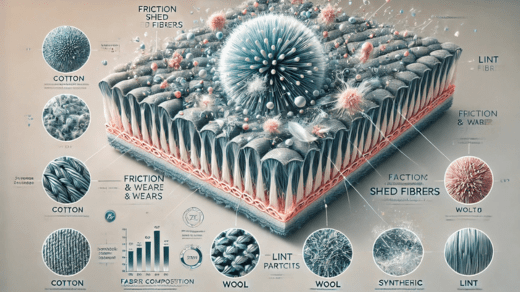
Have you ever wondered why lint forms on your clothes, blankets, or even in your hair? This seemingly insignificant fuzz is actually the result of a fascinating scientific process. Understanding why fabrics shed fibers and how lint accumulates can help in reducing its impact on clothing, furniture, and household appliances.
What Is Lint?
Lint is composed of tiny fibers that break away from fabrics during everyday use, washing, or drying. These fibers come from cotton, wool, polyester, and other materials that naturally degrade over time. As clothes rub against each other in the washer and dryer, the friction causes fibers to loosen and collect on different surfaces.
The Structure of Fabrics and Fiber Shedding
Different fabrics have unique compositions, and some shed more than others. Fabrics like cotton and wool, which have a looser weave, tend to release more fibers. This is because their short, delicate fibers break off easily. In contrast, synthetic materials such as polyester or nylon are tightly woven, making them more resistant to fiber shedding.
The natural process of fiber breakage is influenced by:
- Weave and Fiber Length – Loose weaves shed more than tight weaves.
- Fabric Age – Older fabrics break down more, increasing lint production.
- Washing and Drying Methods – High heat and friction in machines speed up fiber shedding.
To understand how these factors affect different fabrics, explore this in-depth discussion on why some materials attract more lint than others.
Why Does Lint Collect on Certain Surfaces?
Lint tends to stick to specific surfaces more than others, and the reason lies in static electricity and fiber attraction. Materials like fleece, wool, and synthetic fibers generate static charges that attract lint. Similarly, dark fabrics tend to show lint more visibly, even though they may not necessarily collect more than lighter-colored materials.
Reducing static electricity can significantly cut down on lint accumulation. Some simple tricks include:
- Using fabric softeners or dryer sheets to reduce static
- Avoiding overdrying clothes in the dryer
- Wearing fabrics that naturally repel lint, like silk or polyester
For tips on how to remove lint from blankets, towels, and clothing effectively, check out these expert solutions.
The Role of Friction in Lint Formation
Friction plays a crucial role in the creation of lint. When two fabrics rub together, fibers loosen and separate from the material. This is especially true for towels, sweaters, and fleece, which experience heavy friction during use.
Activities that increase fabric friction include:
- Washing clothes together without sorting by fabric type
- Drying clothes in an overloaded dryer
- Rubbing against rough surfaces like carpets and upholstery
Reducing friction is key to keeping lint at bay. Turning clothes inside out before washing, using mesh laundry bags, and choosing a gentle wash cycle can all help in minimizing fiber shedding.
Lint and the Environment
Did you know that lint isn’t just a household nuisance—it also contributes to microfiber pollution? Many of the fibers shed during washing, especially from synthetic fabrics, end up in wastewater. These microfibers eventually make their way into rivers, lakes, and oceans, harming aquatic ecosystems.
To combat this, you can:
- Use a lint filter or a washing machine filter to trap fibers
- Wash synthetic fabrics less frequently or choose natural materials
- Avoid using high heat, which speeds up fabric breakdown
Conclusion
Lint is a natural byproduct of fiber breakdown, but understanding why it forms can help in reducing its presence in your daily life. By choosing the right fabrics, washing methods, and lint-removal tools, you can keep clothes and household items lint-free while minimizing environmental impact.
Would you like to dive deeper into lint prevention and removal strategies? Check out this detailed guide on lint-free living here.