For many homeowners, having a well feels like a small luxury. There’s no monthly municipal water bill, no dependence on a city supply, and often a sense of independence that comes with drawing water from beneath your own property. But that independence also comes with responsibility. Unlike public water systems, private wells are usually maintained and monitored by the property owner. If something changes, it’s up to the homeowner to notice, investigate, and respond.
Water quality problems don’t always arrive with an obvious warning. Sometimes the first clue is a rusty stain in the sink. Other times, water develops a sulfur-like smell, leaves scale on fixtures, or tastes different from one season to the next. Understanding how well water behaves, when testing is needed, and how treatment systems work can help homeowners protect their water supply without making the process unnecessarily complicated.
Understanding How Well Water Can Change
Groundwater is influenced by the geology, soil, vegetation, and activities surrounding a property. As water moves through the ground, it naturally picks up minerals and other substances. This is why two homes located only a short distance apart can have noticeably different water quality.
A private well may contain elevated levels of hardness minerals, iron, manganese, sulfur, sediment, or microorganisms. The exact concerns depend on local conditions, the depth and construction of the well, and the condition of the surrounding land.
Seasonal changes can also affect water. Heavy rainfall or flooding may allow contaminants to enter a poorly sealed well. Nearby construction, agricultural activity, fuel storage, and septic-system problems may create additional risks. Even a well that has produced good water for years should not be assumed to remain unchanged forever.
Why Regular Water Testing Matters
Water testing is one of the most important responsibilities of a well owner. It provides information that cannot be confirmed through taste, smell, or appearance alone. Clear water may still contain contaminants, while an unpleasant taste may be caused by something relatively harmless.
A basic well-water test often includes bacteria, nitrates, pH, hardness, iron, and other common indicators. Depending on the location and possible risks, testing for arsenic, lead, manganese, volatile organic compounds, or other substances may also be appropriate.
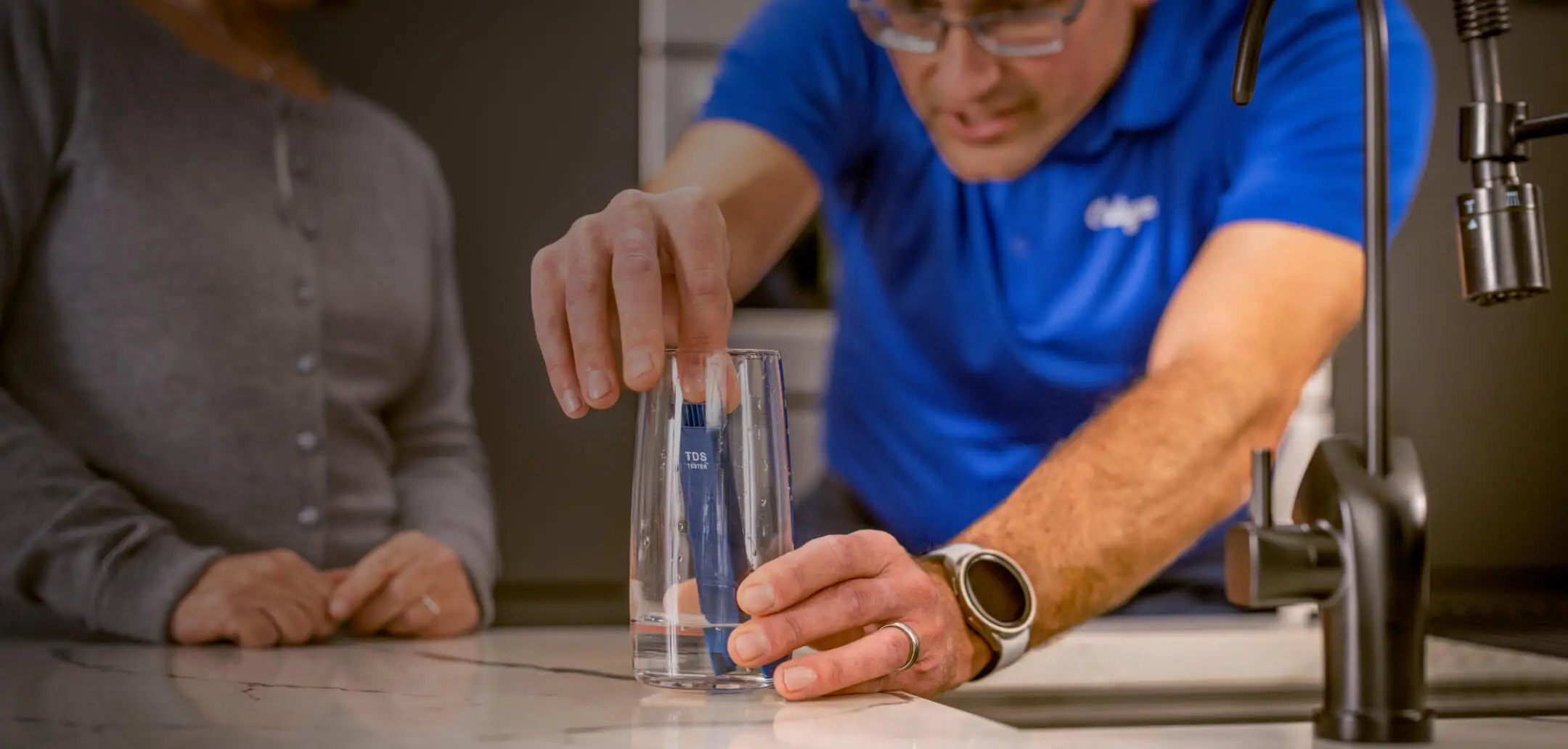
Testing should be arranged through a certified laboratory or a qualified water professional. It’s especially important to test after flooding, well repairs, changes in taste or odor, or any event that may affect groundwater quality. Families with infants, older adults, or people with specific health vulnerabilities should ask a professional whether additional testing is advisable.
The results should be reviewed carefully. A laboratory report may include technical terms and numerical limits that are difficult to interpret without guidance. Homeowners should ask what was detected, whether the levels are concerning, and what steps are recommended.
Common Well-Water Problems in Residential Homes
Well-water issues vary, but certain problems appear frequently. Hard water is one of the most common. It contains minerals such as calcium and magnesium, which can create white scale around faucets, showerheads, water heaters, and appliances.
Iron and manganese may leave orange, brown, or black stains. They can also affect taste and create deposits inside plumbing. Hydrogen sulfide, often described as a rotten-egg smell, may be present in some groundwater sources. Although the odor is unpleasant, its cause should be properly identified rather than treated with a random filter.
Sediment can enter water when a well is disturbed, when the pump or casing has an issue, or when groundwater conditions change. Sediment may clog fixtures and reduce the life of treatment equipment if it is not addressed early.
Bacteria are another concern, particularly when a well is poorly sealed, damaged, or affected by surface water. Bacterial contamination requires prompt attention and should never be dismissed because the water looks normal.
Choosing Professional Treatment Based on Evidence
Once testing identifies a problem, the next step is selecting the right solution. Professional treatment should always be based on the actual water-quality results rather than a generic package or sales pitch.
Different systems are designed for different purposes. Sediment filters can reduce suspended particles. Carbon filters may improve taste and odor and reduce certain chemicals. Water softeners are commonly used to manage hardness. Iron filters can address certain forms of iron and manganese, while ultraviolet systems may help control microorganisms under suitable conditions.
Some well-water problems require more specialized equipment. Oxidation and filtration may be used for iron, manganese, or sulfur-related concerns. Reverse osmosis may be appropriate for certain drinking-water contaminants, though it is not automatically necessary for every household. In some cases, well disinfection or repairs to the well itself may be more important than installing a treatment unit.
The correct solution depends on the contaminant, its concentration, water usage, flow rate, and the homeowner’s budget. Treating water without identifying the problem can waste money and may leave the real concern unresolved.
Whole-House or Drinking-Water Treatment?
One important decision is whether treatment is needed throughout the home or only at selected taps. Whole-house systems are installed at the main water entry point and treat water used for bathing, laundry, cooking, and cleaning. They may be useful when the issue affects the entire supply, such as hardness, sediment, staining, or unpleasant odors.
Point-of-use systems, such as under-sink reverse osmosis units, focus on drinking and cooking water. They can be practical when the main concern involves a specific contaminant or when homeowners want a targeted solution.
There is no universal answer. A whole-house system may be unnecessary for a minor drinking-water concern, while a countertop filter will not solve scale throughout the plumbing. A water professional can help determine where treatment is most useful.
Installation Quality Makes a Difference
Water treatment equipment needs to be installed correctly to work as intended. The system must match the well pump’s flow rate and the household’s peak water demand. If the equipment is too small, water pressure may suffer. If it is too large, the homeowner may pay for capacity that is never needed.
Installation also involves drainage, electrical access, bypass valves, pipe connections, and enough room for maintenance. Equipment should be positioned where filters, tanks, and controls can be reached easily. A system that is difficult to access is more likely to be neglected.
Homeowners should ask about warranties, replacement parts, operating costs, and service requirements before approving installation. Understanding these details makes ownership easier in the long run.
Working With Trusted Professionals
Because well-water treatment can involve health, plumbing, and equipment decisions, choosing the right service provider matters. Trusted water treatment experts should be willing to explain test results, describe how recommended equipment works, and provide clear information about ongoing maintenance.
Be cautious of providers who insist that every home needs the same system or use fear to pressure customers into immediate purchases. A responsible professional should explain what the equipment can and cannot remove. Product certifications, written estimates, and transparent service terms are all worth requesting.
A good provider may also inspect the well components, pressure tank, pump, and plumbing when necessary. Sometimes the water-quality problem is connected to a mechanical issue rather than a treatment need alone.
Maintaining a Well-Water System
Even the right treatment system requires regular attention. Filters need replacement, softeners may require salt, ultraviolet lamps eventually need changing, and storage tanks may need inspection. Maintenance schedules vary according to equipment and water conditions, so homeowners should follow manufacturer instructions and professional recommendations.
The well itself should also be inspected periodically. Keep the area around the wellhead clean and protected. Avoid storing chemicals, fuel, or waste nearby. Make sure the well cap is secure and that surface water cannot easily collect around it.
Keeping records of water tests, repairs, filter changes, and servicing can help identify patterns and prevent missed maintenance.
A More Confident Approach to Well-Water Care
Owning a well offers independence, but it also means taking an active role in water quality. Regular testing, careful observation, proper equipment selection, and routine maintenance can make the system more reliable and easier to manage.
The goal is not to install the most complicated treatment setup available. It is to understand the water and choose a solution that addresses the actual concern. With informed decisions and dependable professional support, homeowners can enjoy the benefits of well water while protecting their plumbing, appliances, and household peace of mind.